Salads have long been a go-to option for a light and healthy lunch. They are easy to prepare, packed with nutrients, and can be customized to suit individual tastes. However, many people often find themselves feeling hungry soon after finishing a salad, leading them to reach for unhealthy snacks or overeat at their next meal. This is where the addition of greens and grains can make a significant difference.
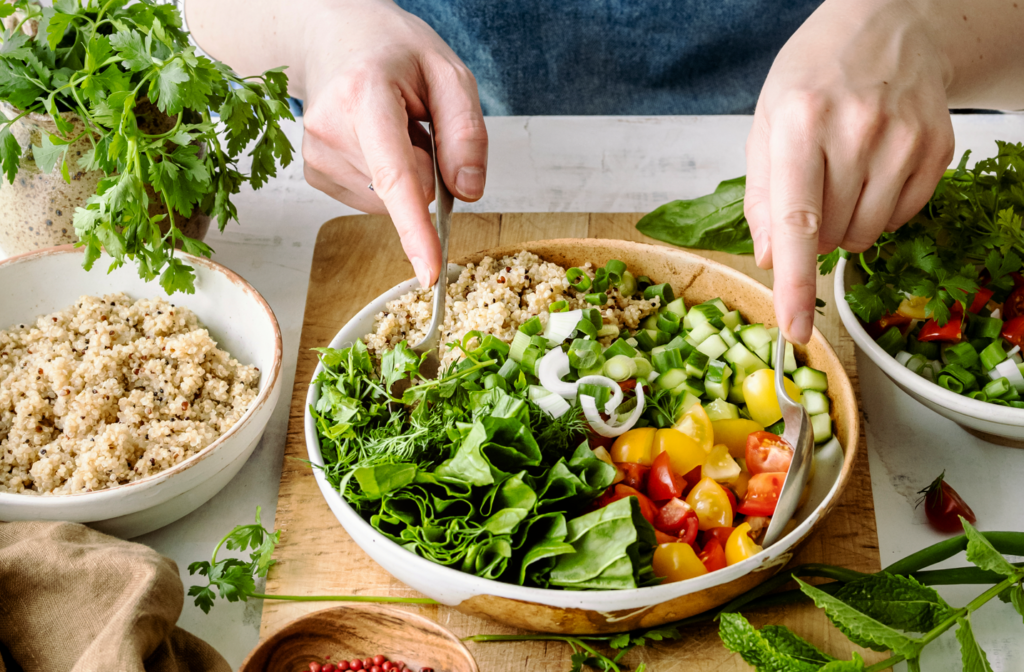
Greens, such as spinach, kale, and arugula, are known for their high nutrient content. They are rich in vitamins, minerals, and antioxidants, making them an essential part of a healthy diet. Grains, on the other hand, provide a good source of complex carbohydrates, which are essential for energy and satiety. By combining these two elements in a salad, you can create a satisfying and nutritious meal that will keep you feeling full and energized throughout the day.
One of the main benefits of adding greens and grains to your salad is the increased fiber content. Fiber is crucial for maintaining a healthy digestive system and promoting feelings of fullness. Greens, in particular, are high in insoluble fiber, which adds bulk to your stool and helps prevent constipation. Grains, on the other hand, are a good source of soluble fiber, which can help lower cholesterol levels and regulate blood sugar levels. By including both types of fiber in your salad, you can promote a healthy gut and reduce the risk of chronic diseases.
Moreover, greens and grains are low in calories but high in volume, making them an excellent addition to a weight-loss diet. By filling up on these nutrient-dense foods, you can reduce your overall calorie intake without feeling deprived. This is because the fiber and water content in greens and grains add bulk to your meal, making you feel full and satisfied. Additionally, the slow-digesting complex carbohydrates in grains provide a steady release of energy, preventing the sudden spikes and crashes in blood sugar levels that can lead to cravings and overeating.
Another benefit of adding greens and grains to your salad is the variety of textures and flavors they bring. Greens, such as romaine lettuce and arugula, provide a refreshing crunch, while grains, such as quinoa and brown rice, add a chewy texture. This combination of textures can make your salad more enjoyable to eat and prevent boredom with your meals. Additionally, grains can add a nutty or earthy flavor to your salad, enhancing the overall taste and making it more satisfying.
When it comes to choosing which greens and grains to add to your salad, the options are endless. You can mix and match different types of greens, such as baby spinach, kale, and mixed greens, to create a diverse and nutrient-rich base. For grains, you can choose from a variety of options, including quinoa, brown rice, farro, and barley. These grains are not only high in fiber and complex carbohydrates but also provide a good source of protein, making them a great addition for vegetarians and vegans.
In conclusion, adding greens and grains to your salad can significantly enhance its nutritional value and make it a more satisfying midday meal. The combination of fiber, complex carbohydrates, and a variety of textures and flavors can keep you feeling full and energized, making it easier to maintain a healthy diet and reach your weight loss goals. So next time you’re preparing a salad, don’t forget to add some greens and grains for a delicious and nutritious lunch.
Best seller Kitchen Gadgets: