

This is one of those meals I make when I don’t feel like following a strict recipe but still want something healthy and satisfying. A vegan Buddha bowl is really just a mix of simple ingredients put together in a way that works — and somehow it always turns out good.
I like it because it’s balanced without being complicated. You’ve got something hearty, something fresh, something crunchy, and a good dressing to bring it all together. It’s the kind of meal that looks colorful and filling, but doesn’t take much effort once you get used to it.
Yields: 2 bowls
Time: 25–30 minutes
Ingredients:
For the bowl:
- 1 cup cooked quinoa (or brown rice, farro, etc.)
- 1 small sweet potato, peeled & cubed
- 1 cup canned chickpeas, drained & rinsed
- 1 cup kale or spinach, chopped
- ½ avocado, sliced
- ½ cup shredded carrots
- ½ cup red cabbage or purple slaw
- Olive oil, salt, pepper, paprika, garlic powder (for roasting)
Optional toppings:
Pumpkin seeds, sesame seeds, microgreens, pickled onion
Tahini Dressing:
- 2 tablespoons tahini
- 1 tablespoon lemon juice
- 1 teaspoon maple syrup
- 1 small garlic clove, grated
- 2–3 tablespoons warm water to thin
- Salt & pepper to taste
Directions:
- Roast sweet potato & chickpeas:
Toss sweet potato cubes and chickpeas with olive oil, salt, pepper, paprika, and garlic powder.
Roast at 400°F (200°C) for 20–25 minutes until golden. - Make quinoa:
While that’s roasting, cook or warm quinoa according to package directions. Season lightly with salt or lemon juice. - Mix the dressing:
In a small bowl, whisk all dressing ingredients until smooth and creamy. - Assemble the bowls:
Start with a base of grains. Add roasted sweet potatoes, chickpeas, raw veggies, avocado, and greens in sections for a colourful look. - Drizzle with dressing and sprinkle with seeds or fresh herbs if desired.
Tips:
Swap chickpeas for tempeh or tofu for a protein switch-up.
What I enjoy most about this recipe is how flexible it is. Some days I’ll use whatever vegetables I already have in the fridge, and other times I’ll plan it out a bit more. Either way, it works.
I also like that nothing has to be perfect — you can mix warm and cold ingredients, keep things simple, or add more toppings if you’re feeling creative. It’s one of those meals where you can’t really mess it up.
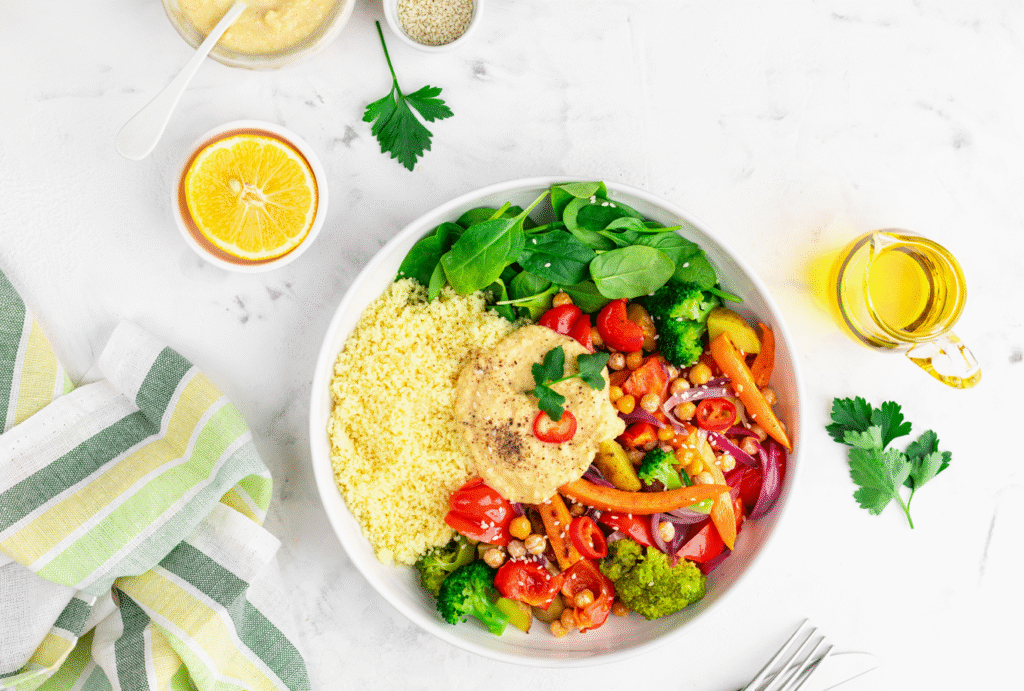
As you prepare everything, it slowly comes together piece by piece. The grains give you a warm, filling base, while the vegetables add color and texture. If you’re roasting anything, that’s where most of the flavor builds — especially with simple spices and a bit of oil.
By the time everything is in the bowl, it looks like a lot, but that’s kind of the point. Buddha bowls are meant to be generous and satisfying, with a mix of textures in every bite.
Best seller Kitchen Gadgets:
Tips for a Better Vegan Buddha Bowl
- Use a mix of textures (soft, crunchy, creamy)
- Don’t skip the dressing — it ties everything together
- Roast at least one ingredient for deeper flavor
- Add something fresh (like greens or herbs) at the end
- Taste and adjust — even simple bowls benefit from a bit of seasoning
This is one of those meals I keep coming back to, especially on busy days. It’s simple, filling, and easy to adapt depending on what you have at home.
Sometimes I make it for lunch, sometimes for dinner — and honestly, it’s one of the few meals that doesn’t get boring because you can change it every time.